Diving Scapa Flow (Part 3) - UB-116
In addition to the sunken German fleet capital ships like the Coln, Karlsruhe, KronPrinz and so on, there are other wrecks in Scapa Flow with their own stories to tell.
One of my favourites is the UB-116. As the name suggests, she's was a WWI era UB class submarine. She was commissioned right at the end of the war in May 1918 launching from the Blohm and Voss yard in Hamburg. On 25 October 1918 she left Heligoland for Scapa Flow, at this point in the war the regular enlisted men had already started to mutuny but the German authorities wanted to show that power still existed in the fleet and launched a final attack on British warships. The U boats were intended to be the tip of the spear of any attack and sink a large number of British ships.
She was commanded by a young officer, one Oberleutnant Hans Joachim Emsmann. His appointment and the fact his crew were largely officers, suggested that the German powers had little choice about who they sent to what they almost certainly knew would be a suicide mission.
The German intelligence was weeks out of date and incorrectly suggested that a southern approach to the Flow though Hoxa sound was lightly defended and entrance would be possible. On the night of October 28th 1918 the U boat surfaced to take a final bearing before heading into Hoxa sound and the Flow. What the young commander didn’t realise was that not only had a land based station picked up sight of them, the British had hydrophones covering Hoxa sound as well as remote operated mine fields and electro-magnetic detection.
At 22:21 on the night of October 28th the hydrophones picked up the first sounds of a running engine. No ships were visible, so the defences went to high alert and the mine field was armed. At 23:32 the submarine was sensed on the magnetic instruments passing over the remote operated minefield which was then triggered. Unsurprisingly the noises then stopped.
At daybreak on the 29th, the Navy sailed out and found oil rising to the surface. They then dropped further depth charges to really ensure the 36 men and ship were really dead. Divers (the hard hatted type) later visited the site to recover code books, mine field maps and later bodies. In the words of my skipper on this trip, "they didn’t need weights, they sunk due to the sheer size of their testicles". Diving to this depth in 1918 and then breaking into a submarine, certainly required them.
There normally the story would end, but just like the German interned fleet, UB-116 was sold for scrap in the 1960s and in 1975 a team of salvagers set charges on the wreck, either not knowing or not appreciating just how many torpedoes remained intact on her. The resulting explosion was impressive, destroying pretty much every breakable object on the salvage boat and launching pieces of wreck all the way to nearby islands. The salvage boat did eventually limp back to port but it could be argued she was the last ship to be sunk as a result of WW1 action.
Unsurprisingly given the minefield, depth charges and salvagers explosives there isn’t much left in the way of recognisable submarine, she exists now as parts of a submarine. The most easily identifiable of which is the cap of the conning tower set just off the main wreckage.
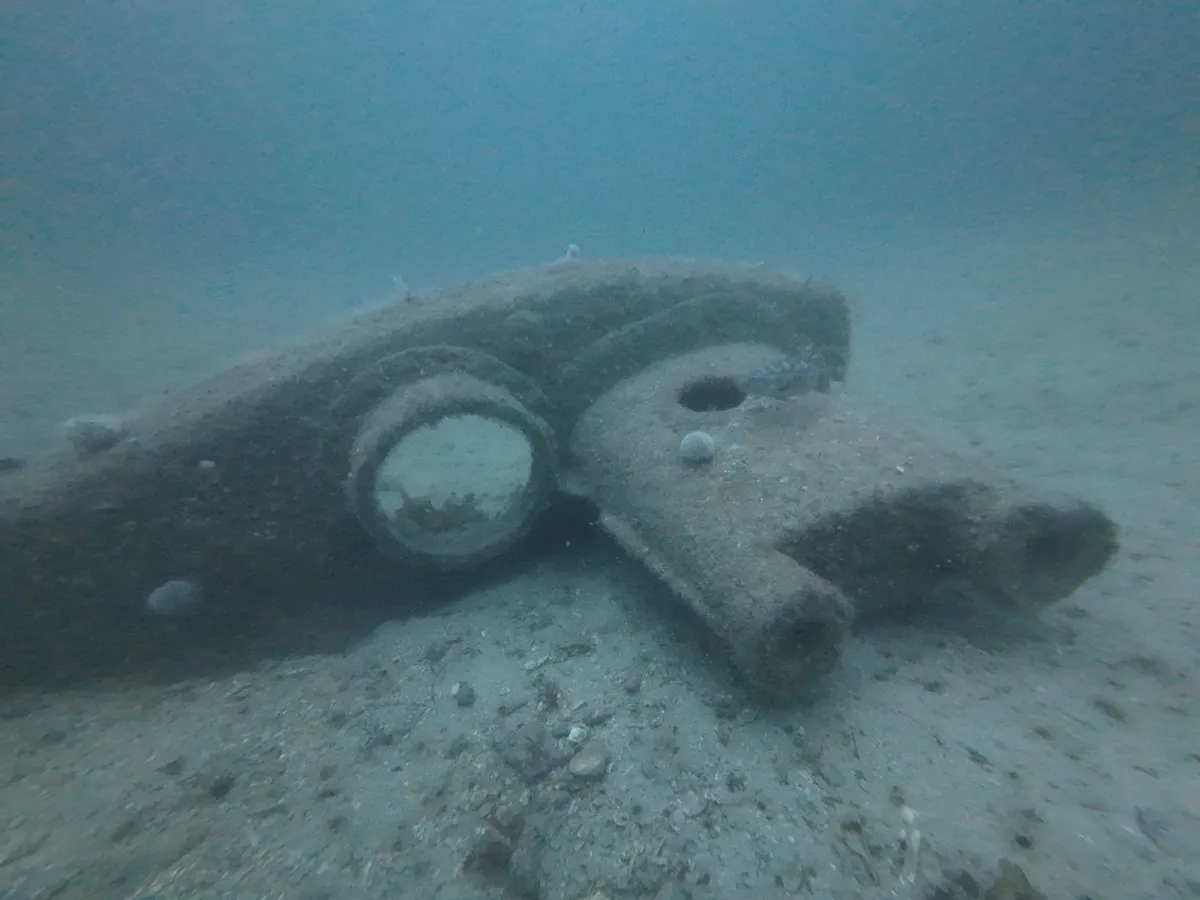 The conning tower cap
There are big air tanks still present that would have controlled ballast. Winding gear and other machine parts remain identifiable.
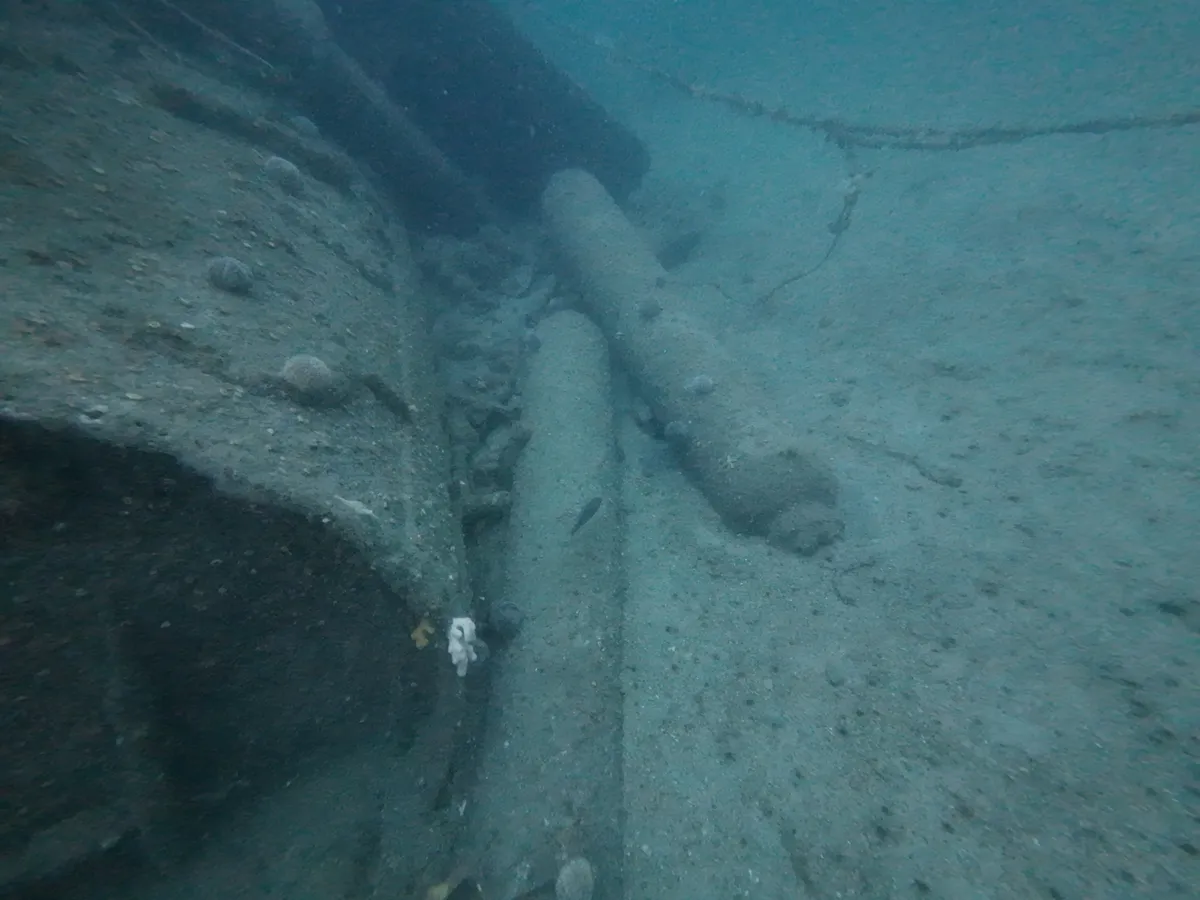 Wreckage and two air tanks
I'm told there are still lumps of torpedo explosive but happily I didn’t see any and possibly also pieces of leather remaining from the clothes and shoes of the men on board which is a sobering thought (although again I didn’t see any). As a dive, I really like this one, its shallower than most of the ships in Scapa and usually clearer with better light.
The Conning tower cap
The winding gear
The general wreckage, with visible air tank
Diving this with my SF2 eCCR I hit a max depth of 29m so mostly the limiting factor was deco left from my previous deeper dive and how much cold I could take. In the end, I spent a happy hour on her before a small amount of decompression and a much needed hot drink back on deck.