As a keen UK wreck diver, the last few days in between work and some BSAC pool training, I’ve been contemplating how badly the government will screw me again, but also coming to the conclusion that divers have screwed themselves. The BSAC article at https://www.bsac.com/news-and-blog/the-protection-of-military-remains-act-1986-and-the-armed/ lays out the basics and my own thoughts are below.
It must be said, British diving has an annoying history of knocking bits of shipwrecks and then them ending up in someone’s man cave or garage. I had hoped the British diving community had learned to be better, but it would seem the gung-ho fucking ignorant mindset remains in some divers. For the avoidance of any doubt, I’m of the opinion that bits of shipwrecks should be left on the shipwreck unless respectfully removed in the service of a museum. As with sites on land that might be the site of a critical battle of the civil war, say, you may go see them, even walk across the land but don’t turn up with a shovel!
There is currently the Armed Forces Bill making its way through the UK parliament and within which is Clause 47, an amendment to the Protection of Military Remains Act 1986 (PMRA). The short version is, any ship sunk in military service will be considered a Protected Place under law and thus come under control to not physically disturb the wreck, remove anything from it or enter the wreck.
Now there are Protected Places and Controlled sites. The latter, when it comes to wrecks, are the, don’t go near it, don’t dive it, don’t even drive a boat across it or you’ll piss off the Navy and be invited for an unpleasant chat, type of wrecks like the HMS Royal Oak who went down with 835 men and boys in Scapa Flow.
Currently wrecks MAY be designated as a Protected place and 93 currently are. This list includes the E49 which I’ve dived in Shetland and rates as one of my all time favourite dives. She went down in WWI with 31 souls aboard, so a not inconsiderable war grave. Hanging above her, seeing the remains resting on the white sand of the bay at the northernmost tip of the UK gives one pause. It’s a sad story and a beautiful wreck, to be treated with only the utmost respect. The Protected place designation also applies to, among others, the M2 in Portland bay, now whilst the story is also tragic, she has been dived by just about every sea going diver in the UK. A hugely popular wreck for divers and sunk mostly through incompetence rather than enemy action although that is little comfort to the men who died on her.
The proposals to not remove anything from the wreck get my full and whole hearted support, you shouldn’t be doing that anyway. I have some concerns about the entering ships provision. Some ships that may fall under this act like the popular James Eagan Lane (JEL) you’d be hard pressed NOT to enter it. Its hull is so wide open and broken up you can easily go inside without noticing. More deliberate wreck penetration should only be done by those suitably qualified and due care taken to not damage anything in the process and as divers we should know and understand this. Just as we should know not to take the shiny portholes! Imagine National Trust members going to a stately home and prising out the odd window or removing a chandelier instead of just walking sedately through the house and admiring the sideboard. Divers would do well to remember what and where we are when diving a wreck. These are historical sites and should be treated as such. Entering is not a sin as long as due respect is given.
So where does this lead us? The wider article at https://divernet.com/scuba-diving/general-wrecks/warning-to-uk-divers-all-military-wrecks-to-be-hands-off/ suggests that some of this change is coming about because of divers like Dom Robinson and his continually sticky fingers. He has removed bells and nameplates from ships and whilst making a big thing about he declares them, this may have annoyed the authorities who would rather military remains stayed unmolested by Dom and his hammer. You can’t draw a direct line from the divers of today who still take brass and keepsakes from the (now) deeper wrecks they find and dive, but it’s hard not to think that had they been more considered and left items where they remained, we wouldn’t now have this provision that might make it considerably harder for respectful divers to be able to see a military wreck.
All wrecks and especially those which resulted in loss of civilian or military life should be treated as we treat sites above ground. Allow people to look, allow people to respectfully move around the site but not to cause harm, damage or to TAKE ANYTHING! If this makes it to law (and there is little reason it won’t) then divers who have previously enjoyed the popular M2 and JEL and honoured the fallen on the E49, may now find we’re limited to civilian wrecks with less to see, less interesting history (my personal love) and have to jump through more hoops than previously if we are able to visit at all. All of this because we as divers sadly couldn’t be trusted.
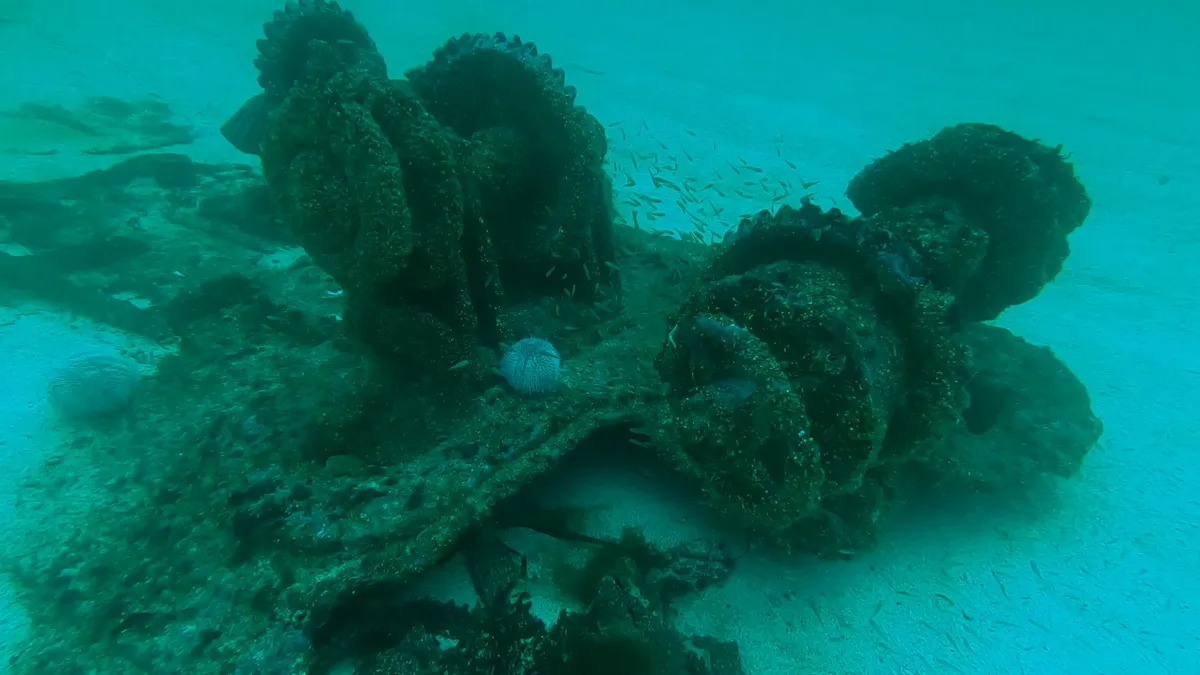 E49 Gearing
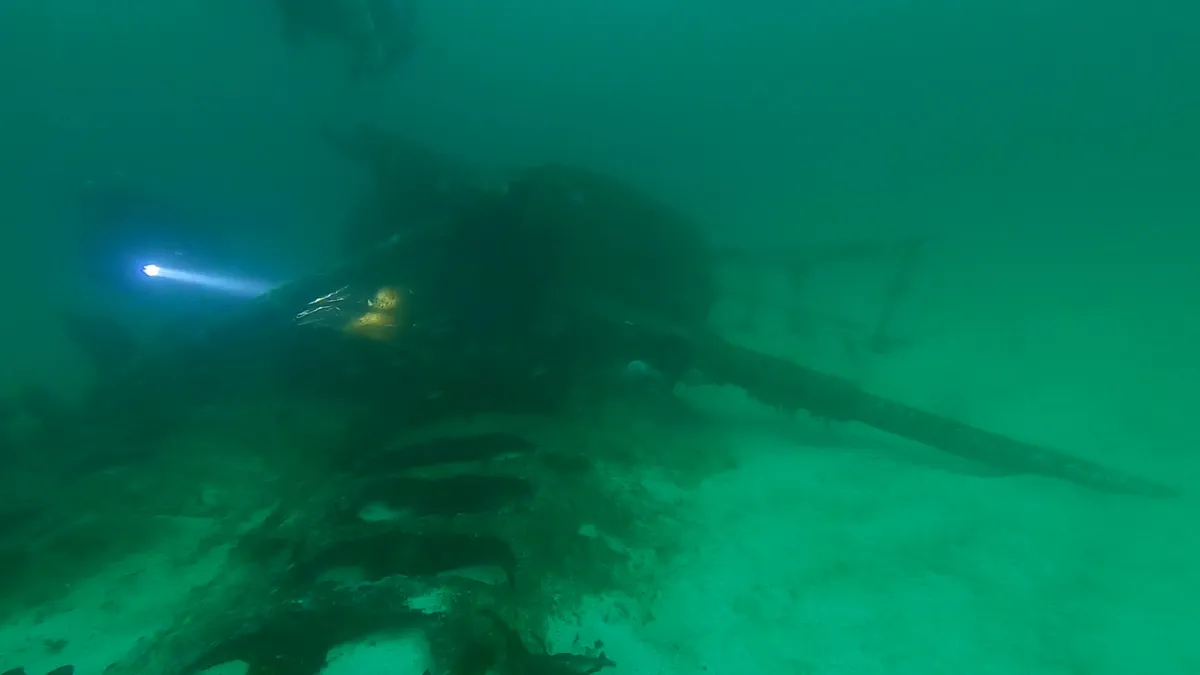 E49 wreck
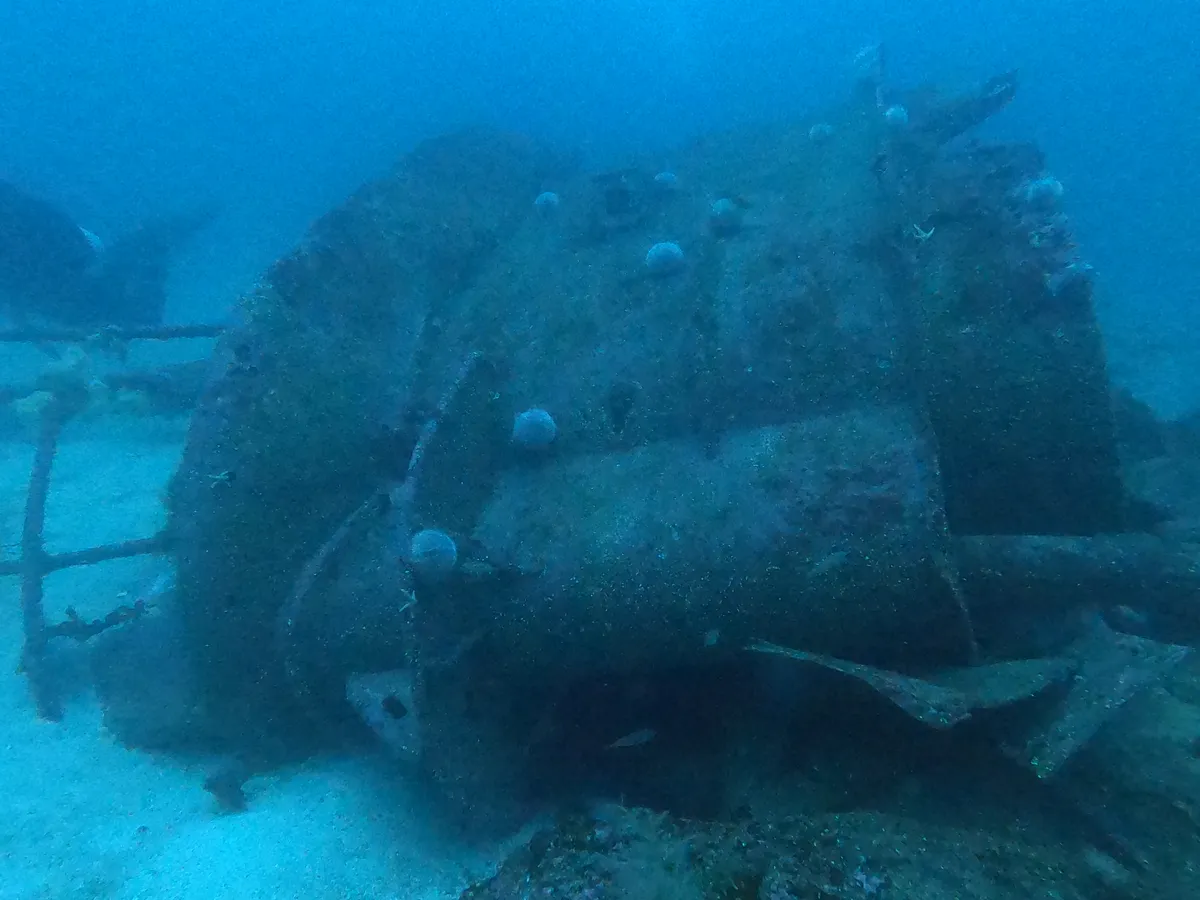 Conning tower of the E49